ROME, 15 July 2026
SELI Overseas completes key 10-day retrofit for TBM “Kathrin” on Fortezza-Ponte Gardena line
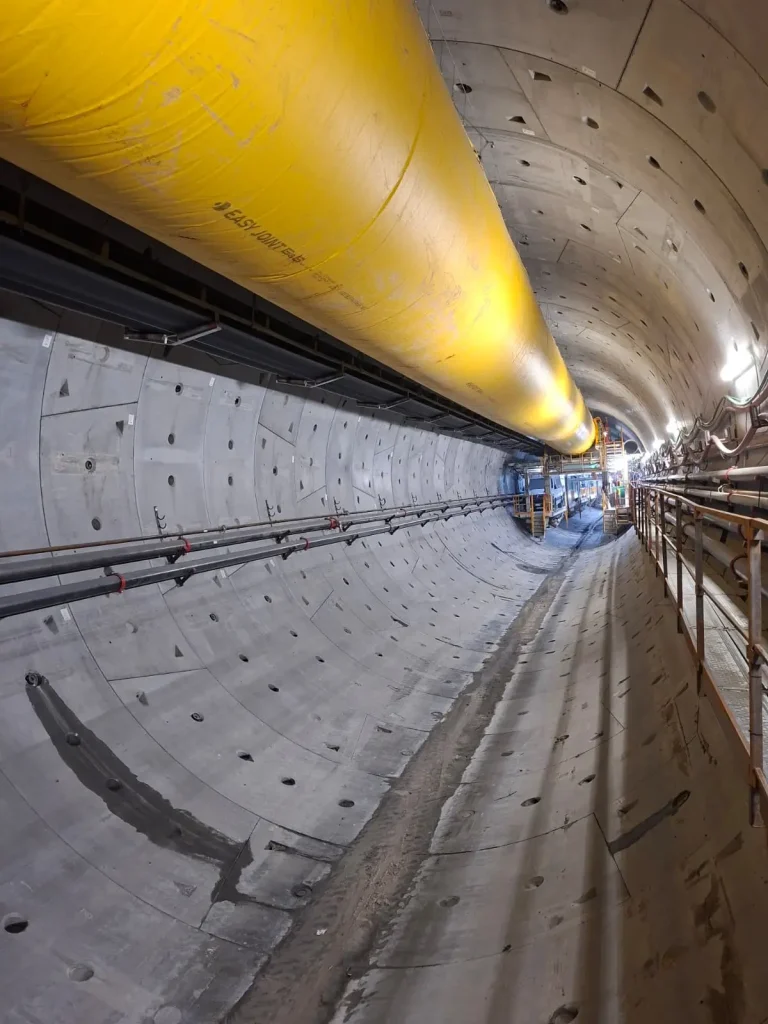
SELI Overseas, a Webuild Group company specializing in mechanized excavation, has successfully completed a strategic reconfiguration of the Tunnel Boring Machine (TBM) “Kathrin” in just ten days. The machine is currently deployed on the Fortezza-Ponte Gardena section, part of the Fortezza-Verona railway quadruplication project. This crucial operation will allow the TBM to navigate a stretch of highly challenging ground conditions, ensuring that excavation work continues without interruption.
After tunneling through solid rock formations, the TBM reached the Val di Funes fault zone, where changing ground conditions demand a shift in operational tactics. Thanks to the swift intervention of the SELI Overseas teams, the machine was retrofitted and immediately put back to work, keeping the schedule on track for one of Italy’s most strategic railway projects aimed at boosting connections with the rest of Europe.
The intervention became necessary following the completion of the Funes Adit (Finestra di Funes)—an intermediate access tunnel that allowed the TBM to enter the main line tunnel and advance toward an area with significantly more complex geology than previously encountered.
As it approached the challenging subsurface of the Val di Funes fault, the TBM was rapidly reconfigured utilizing its Dual Mode technology, a feature engineered to adapt excavation methods on the fly to the varying geological conditions along the route.
The section in question involves an intricate underground system spanning over 16 kilometers, including railway tunnels and service connections, built within a particularly complex geological framework.
The project is part of Lot 1 of the Fortezza-Ponte Gardena section, managed by a Webuild-led consortium. It forms a key link in the Munich-Verona railway axis, which belongs to the Scandinavian-Mediterranean Corridor of the TEN-T network and connects directly with the Brenner Base Tunnel system.
Over the coming months, the TBM will continue to make its way through the most complex segment of the route. Once clear of this section, it will be re-adapted to the shifting ground conditions to push ahead with the tunnel drive. This solution underscores the versatility of modern excavation technologies in adapting to diverse geological environments, ensuring steady progress and safeguarding the project timeline.